Water Pressure Diagnosis in Arlington Heights, IL
Water Pressure Diagnosis checks residential pressure at fixtures and hose bibs; a typical visit runs $125–$275, depending on access and testing scope.
Freeze-thaw cycles can stress buried water lines in Arlington Heights, so a pressure drop that returns after a thaw deserves a measured check. We serve homes near the Arlington Heights Historical Museum and schedule diagnosis around access to the meter, regulator, and utility space.
Older downtown apartment buildings and newer condominium developments can have different pipe layouts and shutoff access. Our crew checks pressure at multiple fixtures before recommending a repair, helping distinguish a building-wide restriction from a problem at one tap. Hot, humid summers also raise household water demand; if several fixtures weaken during busy use, tell us which ones and when.
We explain the findings before work begins. You get a clear account of the likely cause and the repair options, with care taken around floors and occupied spaces. Bring in our team when pressure stays low, changes suddenly, or affects more than one fixture. Call (877) 773-0781 to arrange service in Arlington Heights.
Water Pressure Diagnosis checks residential pressure at fixtures and hose bibs; a typical visit runs $125–$275, depending on access and testing scope.
We install home booster pumps sized to demand; capacity and electrical work shape the typical $800–$2,500 range. Wind chill can freeze exposed piping, so Springfield and Decatur access matters.
We trace sudden whole-house pressure drops for Arlington Heights, IL homeowners, checking accessible supply lines and pressure controls; typical repair costs depend on the failed part and access, often $150–$1,200.
We locate and repair pressure-affecting water line leaks for homeowners, including accessible pipe and buried-line work; typical repairs run $250–$1,500, depending on location and excavation.
We repair residential pressure-reducing valves, including accessible valve and connection work; typical repairs run $200–$600, depending on parts and labor.
We clear residential water-line blockages and inspect accessible pipe sections; a typical visit may run $200–$800, depending on access and blockage severity.
We repair showerheads, valves, and pressure problems; typical repairs run $150–$600 depending on access and parts. Arlington Heights, IL seasons and lake-effect snow can affect service timing.
We repair residential water booster pumps, checking pump components and controls; typical repairs may run $150–$600, depending on parts and access.
Well Water Pressure Repair addresses weak flow and cycling pumps by checking well controls, tank settings, and piping. Cost depends on the fault, parts, and access.
We clear or replace restricted faucet aerators and worn fixture parts; typical repairs run $125–$350, depending on access and parts.
We repair or replace well pressure tanks, matching tank capacity and piping; replacement commonly runs $800–$2,000. Gateway Arch travelers at O’Hare should plan for freeze-thaw strain on buried lines.
We free or replace stuck household shutoff valves, including corroded basement fittings; typical work runs $150–$500 depending on access and valve condition. Midway-area homeowners should protect exposed plumbing from...
We restore hot-water flow at residential fixtures and heater connections; typical repairs run $150–$600, depending on access and parts.
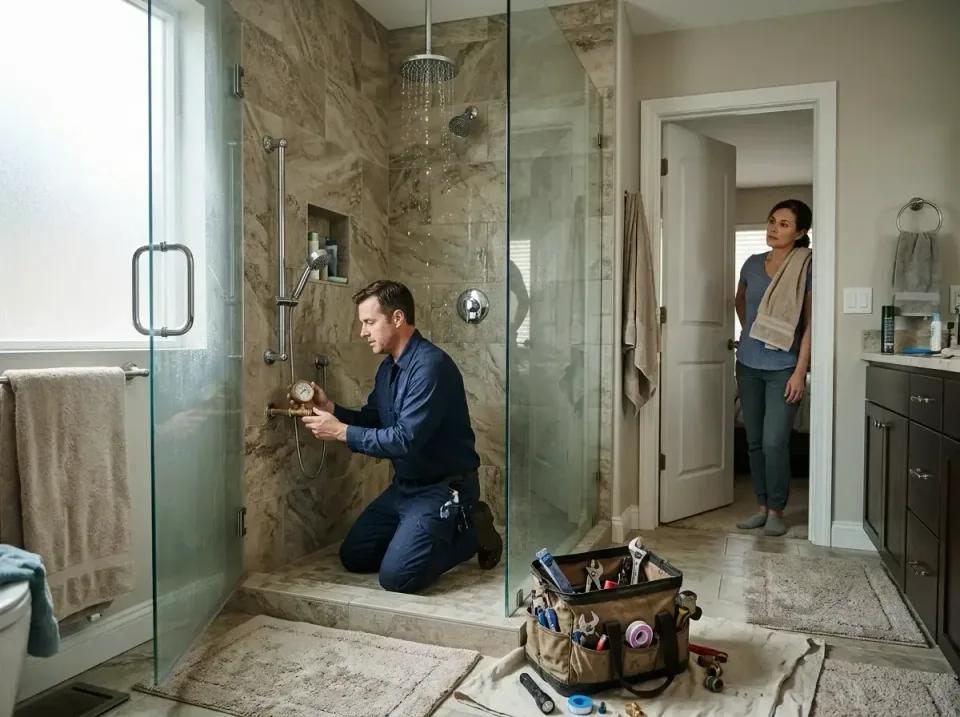
Snow and ice can delay access to outdoor plumbing, so our scheduling accounts for conditions at Arlington Heights properties, including homes near Arlington Heights City Hall. During cold-weather visits, we check exposed service components without assuming the indoor plumbing is the source.
Spring rain can saturate soil around buried service lines, making a recurring pressure change worth reporting. Expect our team to confirm the work area, discuss the repair plan, and complete only the agreed work.
A weak shower across the house or faucets that slow when appliances run can point to a shared supply restriction. In Arlington Heights, seasonal temperature swings can affect pipe expansion and contraction; our team checks pressure and flow at more than one fixture before choosing a repair. You can note whether the change happens only during appliance use.
A booster pump is not the first answer. We verify the source and the building’s needs before considering equipment, while a single weak tap may need fixture-level attention.
Wind chill can freeze exposed piping, so look for visible ice or an unusually cold exposed section without dismantling anything. The area has four distinct seasons, and lake-effect snow in lakefront areas can make access harder; local visits are routed for Arlington Heights, including 60004 and 60005. Call when the pressure remains inconsistent.
Near Arlington Heights Memorial Park, our crew checks accessible piping and tests pressure before recommending a repair. A safe first check is to compare two indoor taps and note whether both are weak.
Heavy rain may expose drainage or basement seepage problems, but seepage alone does not prove a water-supply leak. If pressure drops alongside dampness, tell us where you see it; we can investigate the service piping and consider main water line repair when the evidence supports it.
For a property with a well pressure tank, cycling or changing pressure calls for checking the tank and pump setup rather than guessing from one faucet. We use water pressure diagnosis to identify the likely source, then explain the repair options. Bring in our team if low pressure persists.
Admin.
We measure pressure before and after adjustments and confirm stability before closing the work area. That final check helps catch a setting that looks correct at one moment but does not hold during use.
The Arlington Heights Public Library is one local reference point for our service area, not a substitute for checking requirements with the appropriate local authority. We explain any permit or inspection coordination relevant to the work before proceeding.
Get a clear diagnosis and a repair plan suited to your home.
Technicians check pressure at fixtures and key points in the system, then explain what they find. You can understand the likely cause and discuss a repair plan before work begins.
Experience with Illinois homes helps the team consider older galvanized lines, basement shutoff valves, and freeze-thaw effects when tracing pressure concerns. Diagnosis comes before choosing a repair.
The technician confirms the proposed work with you before starting. The team also coordinates site access and local permit requirements when the planned repair calls for them.
The visit moves from symptom review to pressure checks and confirmed repair.
Check the System
The technician locates the main shutoff and checks pressure at fixtures and key system points. You get an explanation of the findings and the likely source of the problem.
Confirm the Repair
The technician explains the recommended work and confirms the repair plan with you before proceeding. This gives you a clear understanding of the agreed scope and any access needs.
Verify Pressure
After the repair or adjustment, the technician measures pressure again and checks its stability. The work area is closed only after the system check, leaving you informed about the result.
Sediment or grit caught at a faucet screen can be an early clue to inspect. Note which fixtures show buildup and whether cleaning the screen changes the flow, so a technician has useful details to consider.
Rust or corrosion visible on accessible piping deserves attention, even if water still runs. Keep an eye on the affected area and mention its location during a plumbing assessment; avoid disturbing pipes or valves yourself.
Moisture around an accessible shutoff valve is a reason to look more closely at the plumbing area. Share what you notice with a technician, and avoid forcing a stiff or corroded valve.
Lake-influenced spring weather can bring changing conditions around the home. If you are already arranging plumbing work, include pressure concerns in the assessment so a technician can check the system and discuss any needed repair.
Thunderstorms and occasional hail make summer a sensible time to review plumbing concerns alongside other home checks. Ask a technician to assess low pressure and explain whether the issue points to a fixture, line, or system component.
As temperatures shift toward winter, fall offers a practical opportunity to address pressure concerns before colder conditions arrive. A technician can inspect pressure points, explain the findings, and discuss suitable work for the home.
Snowy winters and freeze-thaw cycles can affect plumbing in Illinois homes, especially older lines. If pressure is a concern, arrange an assessment so a technician can check the system and explain what repair, if any, is appropriate.
Permit requirements depend on the work involved. Ask whether the provider will identify applicable local requirements and coordinate them when needed, so you understand what the job entails before it begins.
Ask how the recommended work will be explained and confirmed. A defined scope lets you understand what the technician proposes and what work you are agreeing to before repairs begin.
Request a quote online or contact our Arlington Heights, IL team directly by phone or email.
A shared restriction, regulator issue, or supply-side problem can affect several fixtures. Note whether taps weaken together and whether appliance use changes the flow. In a mid-century brick ranch or postwar split-level, our team tests multiple fixtures and accessible piping before recommending a repair.
Yes. A regulator that is restricted or failing can limit flow through the home. Avoid adjusting it blindly; we measure pressure and check whether the regulator is the cause. Residents near Twin Lakes can call (877) 773-0781 to arrange a diagnostic visit.
Note which fixtures are affected and whether the problem is limited to hot water or changes when an appliance runs. Clear access to the meter or utility area if practical, and identify any visible shutoff or well equipment. Do not force a stuck valve.
Low Water Pressure Repair is also available in these nearby communities across Illinois.